Showing posts with label death. Show all posts

Sunday, June 7, 2026

Attending a Crow Funeral

I heard them before I saw them.

Coming up the sidewalk towards my house, the sound of their cawing filled the morning air.    

Hearing them, I'd assumed the local murder was rousting a hawk or an owl, driving away the threat to their chicks and their territory.  But they weren't in flight.  There were a dozen of them, perched on the branches of a large poplar, or standing as dark smudges upon the light grey shingle of our roof. And all of them were shouting together, piercing the quiet after dawn with their percussive ruckus.

I peered into the trees, expecting to see the brown wings of a harried raptor.  But there was no evidence that my eyes could discern.  Just crows, yelling at the world and at one another.  I watched the trees for a few more moments, but my dog wanted to go into the house where treats awaited, and so we did, leaving the din behind.

I gave the boy his requisite treat, for he had been a good boy, then settled in to do some writing.  My phone rang shortly thereafter, an old friend calling to chat and talk about a visit.  It was still early, and the house was still asleep, and so I stepped out into the warming air of that summer morning to pace about the front yard and talk.

The crows were still there, although a little quieter now.  As I walked and talked, I paused for a moment.

There, on the ground by one of my four by four raised beds, was the corpse of a crow. 

It lay ragdolled in the grass, wings cupped around its head, as if in its last act it had hidden from the world in a tent of dark feathers.  I came closer.  There was no evident injury, not that I've got the eye to discern such a thing.  Peering down at the glossy black body, I saw that the flies and the ants had already found it.

I would need to dispose of it.  As I had that thought, the remaining crows gathered and flew overhead and to the east, singing their gutteral song of lament.

A few minutes later, when the call was done, I got a lavender-scented garbage bag and a garden spade.  Burying the crow in the back yard wouldn't have worked.  My curious dog is a remarkably able digger, and I didn't want us to be on the enemies list of the local murder.

I scooped up the remains as gently as I could, bagged them, and tied it tight.

Afterwards, I looked up crow mourning rituals.  

"Scientists believe," purred back the AI generated reply, "that this only looks like grief, but actually is just a learned response and adaptive behavior to avoid harm and assess danger."  Digging deeper, I found some of the research that led to that assessment, in which...in a test of the mechanisms of empathy...scientists captured a wild crow, restrained it, showed it images of dead crows, and then tranked it and ran a brain scan to look for signs of frontal lobe activity associated with grief.  

This, to explore another living creature's capacity for empathy Oy gevaltMaybe you should test your own understanding of "irony," Science.

Later that day, as I attended the celebration of life for a friend who'd been taken by cancer, I found myself coming back to those crows.  

Corvids are highly intelligent and social creatures.  They're aware of loss, aware of the absence of a member of their tribe, aware that death is an eventuality to be marked.  They're not homo sapiens sapiens, to be sure, but grief and the rituals of loss are not just a human thing.  They are part of what it is to be mortal and sentient.

Not just crows and humans, but dolphins and elephants and primates and every bright creature that realizes what it is, and has a flickering sense of its fleeting moment in the great flow of time.

We that live lament those who do so no longer.  We grieve their absence.  We miss the presence of those who have passed on, borne away by Death on great dark wings.

Monday, February 2, 2026

A Hard World for Little Things


As I drove down the winding rural two lane that leads to my church Sunday morning, all around me the fields and woodland were encased in a deep hard layer of ice, a solid mass of frozen slush that had frozen and refrozen into a surface fully capable of holding the weight of a large adult human being.

The morning was bitterly cold, with temperatures in the low teens and a strong biting wind that tugged and buffeted our old van.  A fit day for neither man nor beast, as they used to say.

I was reflecting on news of a dear friend's recent tragic loss when there was a sudden flutter of wings.  A sparrow rose abruptly from the edge of the road, flew for a moment in front of the hood of the van, and then darted downwards.  There was a small thump, which I took to mean it had flown directly into my front bumper.

A pointless death, I mused, with some lament.  It didn't need to die, and I wished I'd not killed it.  All it needed to do was flit upwards, or to the right, and it would still be living the life of a sparrow.  

I went back to driving and meditating on loss, and was startled when just two minutes later, a second sparrow did the same thing.  It rose up from the edge of the road, and in doing so, flew directly into the windshield of the van.  There was another small thump, and a brief vision of a tiny tumbling feathered wreck.

"What the..." I muttered to myself, a little unsettled.  Two bird kills in two minutes?  I'd listened to a 1953 radio play of Daphne Du Maurier's The Birds with Mom that prior week (produced 10 years before the Hitchcock adaptation).  This was starting to feel a bit familiar, and mirrored the sorrowful character of my thoughts.

I slowed down, and started paying more attention.  

What I saw was that here and there along the roadside, sparrows were gathered in groups of a half dozen or so, pecking about in the exposed grass and startling upwards whenever a vehicle grew near.  I realized that the plowed roads were the only place where grass was exposed, and thus the only place where birds could forage.  The deep hard snow everywhere else would be impermeable to little claws and beaks, and after a week, the sparrows were undoubtedly hungry.

And cold.  And quick to take flight, even if that meant flight into the path of fast-moving metal objects.  Nature and the natural world destroy so quickly, and without mercy.

The words from a Cohen Brothers classic...themselves an homage to another, older film...rose in my thoughts.

"It's a hard world for little things."

It most certainly is.


Tuesday, December 17, 2024

On the Moral Purpose of Guillotines

The mechanism for human beheading that got its name from Joseph Ignace Guillotin is quite good at doing the job for which it was designed.  

Dr. Guillotin was an Enlightenment reformer, a progressive, eager to eliminate the brutality of public executions.  Hangings and other unpleasantnesses inflicted on the condemned among the lower classes were ugly, but so too were the choppy choppy sword and axe executions inflicted on the rich.  It being the enlightened, modern era, Guillotin argued that the purpose of executions was not egregious suffering, but swiftly dispatching a soul to their maker. Oddly enough, he personally opposed the death penalty, and the naming of this machine after him is one of the peculiarities of history.  

It is, as mechanisms go, quite simple.

A grooved wooden frame, into which a weighted blade is set at a height.  Below, a pillory, into which the person about to meet the Deity of their Choice is secured.  Activate the mechanism, and ssssshunk.  Off goes the head.  Instakill.  Neat, precise, swift.

Guillotines were pressed into service most famously during the French Revolution, when they were used to remove the heads of the aristocracy from their bodies.  Kings and queens, lords and ladies, lined up and slaughtered, their heads piling up, as mobs of Jacobins and peasants cheered.  Jacobins were, of course, the primordial leftists who gave the Left its name, as they sat on the left side of the French National Assembly at the dawn of that popular uprising.

That, I think, is the image that for some reason strikes a chord with left-leaning folk, every time some new capitalist depredation is noted.  "Time for the guillotines!  Nothing a guillotine wouldn't solve!"  Memes get memed.  This is meant only kind of in jest, the sort of joking-not-joking that defines so much of our life on social media.

The problem is, of course, that the guillotine isn't progressive.  It's simply a machine designed to allow the powerful to swiftly kill the powerless.  

The French Revolution quickly descended into the Reign of Terror, and started taking the heads of any who stood against the most radical of the Jacobins.  Calls for moderation were met with more beheadings, including those of the Jacobins themselves.  Does the name Danton ring a bell?  No?  It should.  Here.  Watch this entire classic movie.  In the end, even Robespierre, the architect of the Reign of Terror, ended up decapitated. 

And also...y'all were paying attention in history class, right?  What the guillotine accomplished politically was a transition from an autocrat to an autocrat, from Louis XVI to Napoleon, from a king to an emperor.  

It's not an instrument of positive change.  If anything, the guillotine is the symbol of self-annihilating progressive overreach.

But perhaps you're still grumbling and doubling down about guillotines as a tool of the People's Revolution.  

Here.  Let me raise the blade.  Let me set the mechanism.  Let me separate you from your childish notions of redemptive violence.

Who else, in history, used guillotines on the regular?  

One guess.  You know it.

Nazis

By the 1930s, that system of execution had been improved by German engineering.  Same mechanism, but made of metal, with a much heavier weight bearing down on the much sharper blade.  Neat.  Compact. Efficient.  You could fit them indoors, in an execution chamber, for ease of processing and quietly eliminating those who opposed the Reich's fascism.

The Nazis executed over sixteen thousand "enemies of the state" with their guillotines.  

The communist charged with setting the Reichstag fire.  The Dutch Christian students who circulated anti-Nazi pamphlets as the White RoseFranz Jagerstatter, an Austrian Catholic farmer who refused to swear allegiance to Hitler.  

It's a tool used by Power to kill the powerless.  Nothing more.  Nothing less.

Morally speaking, there's a word for that.

Care to guess?

Friday, January 12, 2024

On a Wave of Cookies

Today is the last full day of our old dog Ellie's existence.  

Thursday was rough, as her appetite had dwindled away to nothing, as it will with kidney failure.  Thursday morning she refused any and all food.  No treats.  No ham or turkey or chicken.  No jerky.  No cheese.  No salmon or tuna.  Nothing.  She wouldn't take her pain meds, either, no matter how we cajoled.

Absent any meaningful nutrition or relief, she was weak and in clear discomfort, both desperately hungry and unwilling to eat.  She paced and panted, stumbling about on weakening legs, obviously cramping, unable to find any way to be at ease.  It was time.  

We made the call to a home-visit vet, and got the earliest possible appointment to have her euthanized at home.

The first possible moment, though, was Saturday morning early.  Which meant that we had to get through Friday.

All day Thursday, she alternated between agitation and torpor, and we were dreading the long stretch of her final day in this mortal coil.  A day of discomfort wasn't what we wished for her.  The hard call made, I distracted myself by preparing the earth to receive her, right there in her little patch of woods behind our house, where she's sniffled and snuffled for the last fourteen years.

Last night, returning home from one of her many ladygatherings, Rache brought home a sugar cookie.  On a whim, she offered a little bite to Ellie.  It was immediately gobbled up, along with the entire rest of the cookie.

A solution!  Healthy eating?  No.  But at this point, it didn't matter.  What'd we be worried about, canine diahbeetus?

I booked on out to get more baked goods, and returned with one bag of Pepperidge Farm Chessmen Butter cookies, one bag of their Farmhouse Thin and Crispy butter cookies, and one package of Harris Teeter Blueberry Cream Cheese Coffee Cake Bites.  

She devoured cookie after cookie, and nommed even more voraciously on the cake bites, which also proved to be a perfect delivery mechanism for her pain meds.  She got calmer.  Seemed more at ease.

Today, it's been more of the same.  She ate cookies.  She perked up a little bit, shuffling around in a slightly less wobbly manner.  She ate coffee cake.  When she lay down, she seemed at peace.  She ate more cookies.  She got outside.  She ate even more cookies.  We gave her one last drive through the neighborhood in which she took a lifetime of walks.  

And she did finally turn up her nose at a cookie, but only after knocking back a thousand calories worth.

There are worse ways to leave the world than on a wave of cookies.


Friday, April 17, 2015

The Tomb of the Emergent Christian

I'm a sentinel of sorts, now, standing vigil over one of the last markers of a movement that flickered and died.

After a brief conversation, Presbymergent shut down its Facebook presence many moons ago.  As the remnant of folks left as admins all wanted to keep the page up as an archive of sorts, I volunteered to serve that end.  For a page to exist, there has to be at least one admin, and so that's what I've become.

I am the last Presbymergent on Facebook.

Emergence was a thing, for a while, a decade ago.  It rose out of two simultaneous threads.

In the old-line denominations, emergence was a reaction to the stultifying institutional inertia that can makes denominational ministry such an awkward, lumbering, graceless thing.  Be open to the new!  Don't crush everything under the weight of bureaucratic anxiety management processes and protocols!

For those who'd been brought up in the corporate dynamics of the megachurch world, emergence was a reaction to the synthetic falseness of business-model Christianity.  Be flexible!  Be organic!  Be less like a JeezMart, and more like a gathering of creative friends!

The spur to emergence in both of these milieu was the advent of new and dynamic media, which seemed to offer the promise of communities dynamically being amazing on the interwebs together.  It had the potential to stir the oldlines to new life, and bring authenticity to the groupspeak of evangelicalese.

And it didn't work.

Just didn't take.  The reasons were varied and complex.  Emergent folk weren't really... um ... how to put
this... "organizational" people.  Efforts to fuse the ethos of generative entropy with articles of incorporation and denominational schtuff proved untenable.  I know.  I was on that committee.

That, and we manifested the counterintuitive tendency of anarchists to over-organize, creating such complex structures to insure that every voice is heard that no decision can ever possibly be made.

There were other things.

There was a whole bunch of deconstruction, but not much construction or permission-giving to simply create together.  As the winds tousled our hair, we talked about how to make a sail, and lamented the incompetence and abusiveness of other sail-makers, and dreamed about new ways to harness the wind.

But we did not, in all of that, get around to making a sail.

And so the energy dispersed, like winds uncaught.

What I find fascinating, honestly, is that people still come by on social media.  For a while, folks would post stuff...political links, self-serving links.  Those, I deleted, and shut down unmoderated posting permissions.

Such is the task of a sentinel.

But other people still come and leave their "likes," expressing approval, one or so every week.  I love those little moments.

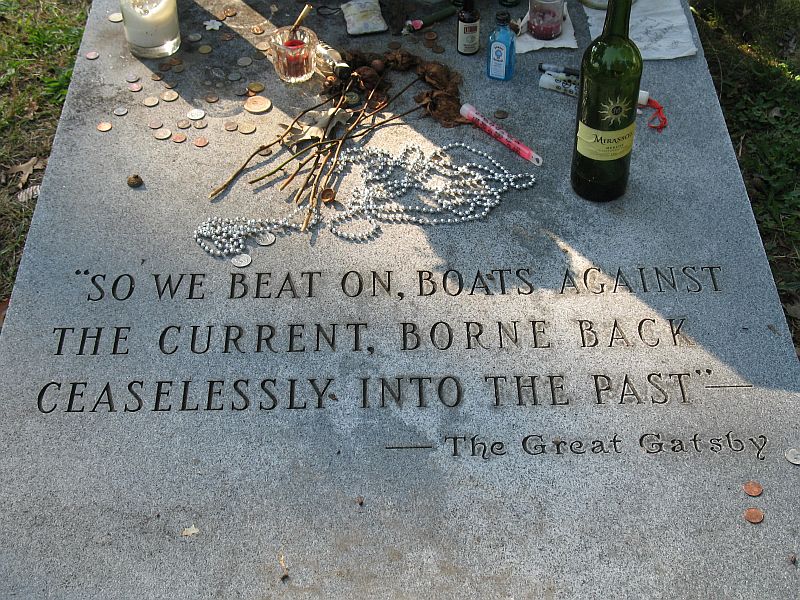
It's like the roses and cognac, left by masked visitors on Poe's grave, to honor what was.  Or those leavings on the grave of F. Scott and Zelda, little trinkets, wine and beads, tokens of respect.

Oh, this was a lovely thing, those likes seem to be saying.  What it could have been...

So it goes, when you stand vigil at the grave of a movement.


Thursday, April 16, 2015

Moral Phenomena

I came across it, just a link to a story, part of the endless fountain of distract-o-media that some random algorithm creates Just For Me.

It was a random thing, a small but intensely painful tragedy, a bit of local news that fluttered briefly to the subsurface of the collective consciousness before floating down again into the dark realm of the forgotten.

It involved an Arizona mom of twin toddlers, walking them on a path on the side of a drainage culvert.  They were in their jogging stroller.

And a wasp or a bee started pestering them.  Just buzzing about, as stinging insects do.  The mom swatted at it, and it got angry, and she swatted more.  In that process, she let go of the stroller for just a moment.  And the stroller, being on an incline and being a jogging stroller, rolled down the sidewalk, then off it.  She raced after it, but could not catch her children.  The stroller tumbled into the culvert, filled with fast flowing water, and though she threw herself in after it, and desperately tried to wrestle it to the bank, the current tore the stroller from her grasp.

Both of her little ones drowned, still strapped into their stroller.  It was tragic, and heartbreaking, and absurd.  Here, a simple cascade of events, a moment of distraction...almost laughable, in how trivial and familiar and human it was...and utterly devastating.

Because...why?

We want to ascribe purpose to such things, to weave them into some plan or intent.  We want to feel that there's a reason behind them, some larger justification.  But I just can't believe it is so.  We are small, and we break easily, and we all die.  Two deaths every second of every day, or so the statistics about human dying go.  Some are expected, others tragic and untimely.  Every one, the momentous end to a story.  Every one, just a droplet diffused in the endless tide of our dying.

But are such tragic things imbued with purpose?

Meaning: are they part of some great moral narrative?

One the one hand, you can say, no, no they're not.  My ol' buddy Nietzsche certainly would.  "There are no moral phenomena," he'd say.  "Only moral interpretation of phenomena."  For those moments of mortal fragility, I'd agree.  There is no moral imperative demanding the deaths of those little twins, or the deaths of that pastor-couple who just happened to be driving under a bridge at the exact instant that part of our crumbling infrastructure crumbled.

The Tower of Siloam falls on the righteous and the unrighteous alike, say I, willfully mashing up my scripture.

But then there are those phenomena that only occur because sentience chooses them.  Actions taken from my moral purpose are non-random, and directly serve a moral end.  When I choose to do X because my faith demands it of me, that is a moral phenomena.  That act has ontological impacts, meaning, it's a real thing, dude.

Like comforting the bereaved.  That's real.  Like an embrace, or a kind word, or showing respect to a human being used to being mistreated.  Like a warm meal, given to an empty stomach.

Or words of forgiveness, delivered from a place where a curse might be expected.


Monday, October 6, 2014

Loss, Death, and Paths not Taken

It was a rough day in Poolesville this last Wednesday, as the news of a young man's suicide hit the town hard.  It was a hard weekend, as one of the faith communities just a short walk from my own spoke out words of sorrow and blessing over that life.

I didn't know him personally.  But he was a child of the town.   In a community where people still know one another, it was clear so many of the folks at my church had been touched by his life. I feel their hurt and the resonance of his loss through so many people around me, like placing your hand on a bell that's been struck, and feeling it hum against your skin.

It's a difficult thing to process.  Here, you had a life that is unquestionably full of promise, and then that promise seems to have vanished like smoke in a strong breeze.  All those moments that you hoped to share, gone.

It feels both so unnecessary and so understandable, particularly if you've been through the fires of adolescence yourself.  Everything feels so immediate, so intense, so radically defining at that momen...and if you're struggling with something, that can feel like it's your whole world.

I remember that feeling, in the same way I remember being a kid and I remember being 25.  If we are to remain ourselves, we can't forget that feeling.  Life was intense, immediate, and the encounter with the pressing realities of adulthood had that radiance that comes from our encounter with the new.  There were moments of failure, and they were abject and abysmal.  There were moments of joy and passion, and they were everything.

And when you're struggling with something, particularly the dark veil of depression, it can feel like that moment of struggle is forever.  There's no escape from it.  The only way out, you think in that moment, is something irrevocable.

That's wrong, because it's not true.  It is not a reflection of reality.  The reality is that there are people who love you, who care for you, and who will be impacted by your loss.  The reality is that if you wait a day, a week, a month--life will seem different.

But it's also wrong because it doesn't reflect the reality of creation.  In the wild universe in which we find ourselves, there's always a different path.  There's always a brighter and more life-giving choice.  The God who makes all things possible does not just set one path before any of us.  There are paths that lead to sorrow, isolation and darkness, sure.  But we do not have to walk them.  We are free to turn away, and choose something different.  That isn't easy, particularly with the blinders of depression constraining our vision.  But it's real.  That potential is there, resting in the knowledge of God.

And that truth, so important to hold in our times of despair, is also important to hold when we have lost someone too young.  What we mourn isn't just the life that has passed, but the life we will not know.  We mourn the moments we will not share with them, that future which is now precluded.

There, from my own faith, there is a solace.  Because although that future is precluded from our knowledge here in this life, it is not precluded from the knowledge of God.  The Creator knows not just what have done and what we will do, but what we might have done and what we might yet do.   Though hidden from us, we can trust that those unfulfilled moments are not unknown to God.  God knows what that life would have been, with a knowledge so deep that it is not simply knowing, but being.

In the heart of God, everything that our loved one could have been is held as surely as the reality we inhabit is held, because there is nothing that God does not know in its fullness.

When we look to a life cut short, to possibilities that seem suddenly gone, there is comfort in knowing that just as the past is not forgotten, neither is that future.

Monday, May 13, 2013

The Physicist and the Funeral

It's been making the rounds, and on some levels, I resonate with it.

It's a bit from NPR a few years back by commentator Aaron Freeman, about how you want a physicist to speak at the funeral of a loved one.  It's a riff on conservation of energy, on the interplay of light and matter, on how no particle of a loved one is lost.

Its almost mystic in its articulation of the interconnectedness of all being, and in that, it has a sort of beauty.

But I wonder, frankly, two things.  First, the author is not a physicist.  He's a performer and writer.

I've been at family funerals where a physicist has spoken about someone they loved who had just passed.  Here's what was important:  that person.  Not the matter, not the energy, not the stuff of our universe that comprised that person, but that peculiar and ineffable interplay of those things that brings a self into being.

If you ask a physicist to get up and talk about someone who has just passed, they will remember that person.  They will remember their laugh, their strength, their boldness, their gentleness.  They will tell stories of life, some wistful, some joyful.

That's what we do, we humans, when the breath leaves one of us.

But second, I wonder at what comfort can be had in the talk of what happens to our bodies.  Amid talk of conservation of energy, Freeman says: "You need not have faith."  Freeman, speaking in the voice of the scientist, reaffirms this.  "You should not have faith."  That the material being of one's loved one is dissolving into the fabric of spacetime should be comfort enough.

What strikes me as peculiar about this is that we have never, not for a moment, not known that our bodies return to earth.  As long as we've been self-aware, this has been true.  That is easily observable, even for bronze age semi-nomadic cultures.  Dust is dust, be it on the ground beneath your feet or in interstellar space.

That you can spin that vision out into the cosmos is all well and good, but what we miss about a person is not the mechanics of their existence.

It is not the body, not the meat and bone and sinew.  When you see another human being die, you know this.

What we mourn and what we miss is them, their awareness, their sentience, their soul, their spirit.  That was woven up with the star-stuff of which they were made, sure.  But it both was that stuff and was not that stuff.

For all the beauty of our cosmos, it is better to remember the person, I think.  And to have hope that on some fundamental level, that ineffable self, that light behind their eyes, that sentience, that too has not been forgotten.  

There, faith still does come in handy.

Monday, May 2, 2011

Celebrating the Death of an Enemy

Last night, after working out and taking the boys to swimming, I got home and settled in to read.  It had been a long day.  Internet was off.  TV was off.    The wife and I both sat on the sofa, me reading my book for the D.Min program and she working late as she so often does.  We did this until about 11, and then we went to bed.  The TV was on for a minute or two as she went through her necessary ablutions and shutdown rituals, but it was Netflix streaming through our Roku topbox.  We were still blissfully oblivious of the world.

Which is why, when I finished walking the dog and went to pick up the newspaper from our driveway, that as my hand went down to grab it,  I noticed that the headline was huge.  What?  What was this?  A big headline, taking me by surprise?  I'm usually so connected that I know things the moment they happen.  Here I am learning about something like it's 1892, through the paper, made of paper, arriving at my house.  It was an odd feeling.

Then I processed the headline, and saw the picture of Bin Laden, and thought, wow. 

Oh.  My. 

Being a born and bred DC townie, that thought was followed immediately by the thought, well, I guess that wraps up the 2012 presidental election. 

It'll also mean that the "Birthers" will be joined by "Deathers," those folks who'll swear up and down that Osama Bin Laden was never killed and/or had actually been killed years before, and that the whole thing is just a conspiracy to score political points.  They'll have plenty of opportunities to pitch out their crazy while Obama celebrates his second term, and still more when he becomes Secretary General of the newly muscular United Nations in 2021.  You know, so he can join with the Illuminati, the Bilderbergers, and the Free Masons as they welcome in the thousand year rule of our Extra-Dimensional Overlords in 2023. 

All part of the plan, baby, all part of the plan.

The killing of Bin Laden doesn't, of course, solve anything strategically.  The Middle East is still a mess.  It will certainly be a major psychological blow to Al Qaida and those who support it.   The young crowds that gathered shouting and gleefully cheering outside the White House and at the 9/11 memorial site last night reflect that psychological reality.   We hated Bin Laden. We had reason to hate him.  Now, we have destroyed him.  It smells like victory. 

Personally, I harbored no human love for Bin Laden.   It is not possible for me, as a husband and a father, to love a man who would personally have killed my Jewish wife and both of my Jewish children if given half a chance.

But neither, as a Christian, can I bring myself to celebrate it.  With the death of Bin Laden comes the end of any chance at his redemption.  Yes, I know, it wasn't going to happen.  But still.  With the death of Bin Laden comes the reminder of how deeply and completely a human life was wasted and squandered in the service of hatred and death.  With the death of Bin Laden comes a reminder of the thousands that died because of his hateful actions, and the many thousands more who have died in the wars that followed.   His death will bring none of them back to the arms of their loved ones.  With his death comes the knowledge...from my faith...that he is now in the presence of God, and that the consuming fire of God's love that is my joy and hope is for him an impossibly unbearable and eternal anguish.

None of those things are cause for celebration.  Just somber reflection, and then moving on. 

There's a lot more work to be done in this mess of a world.

Saturday, March 5, 2011

Death and Traffic

This morning, after the usual hurly burly of prepping kids to truck off to their respective Saturday activities, the big guy and I rolled the Prius onto the exit ramp leading onto the Beltway.  We were, as always, late, and as that Road of Despair rose into view, it was clear that things were not well.

The ramp and long access lane were clear, but the Beltway itself was locked up solid, a metal mass of bumper to bumper carbon-positive crawling.  I was about to mutter something unpastorly under my breath when I noticed the emergency vehicles, two fire engines and two ambulances, just a half click ahead.  The road was blocked, but our approach to the entrance was clear, and there would be no traffic once we got on the highway.

Which would have been cause for celebration, were it not for the fact that it was clearly a bad, bad accident.  We moved carefully by.

There were two cars.   Once was a silver Honda Civic, with no apparent damage.  Perhaps the first person on the scene.  The second was a Nissan Sentra, late 90s vintage.   It appeared to have gone into the retaining wall head first, and at considerable speed.  Around the  driver's side of the Sentra was a cluster of EMTs and firefighters.  They were talking amongst themselves, and some were looking into the vehicle.  They did not seem hurried.

As we passed, I saw that slumped on the steering wheel of the Sentra was a older man.  He was not moving.

I wondered, for I only glanced for an instant, if my mind had created that image, molding the folds of an airbag and a seat into a feared and expected shape.

"What did you see," I said to my son, who had looked longer.

"I saw a man with his head resting on the wheel, Dad.  He wasn't moving."

"That's because he was dead," I said, because it was clearly so.

After that, we talked, as a father should to his child when they first see death.  We talked about the man, and whether he might have had a family, and whether it was better if he did or he didn't.  We talked about dying, and what it's like to watch someone die.  We talked about how important it is to remember those who have passed, how important it is for the living to both mourn and to celebrate the lives that are forever a part of both us and Creation. 

There are times it is both hard and good to be the dad.

Wednesday, April 7, 2010

Dying

One of the things about being a pastor is that you get to, now and again, be with people during important times of their lives. It's the responsibility that one seminary professor described to me as "hatch, match, and dispatch." We baptize the babies. We marry the couples. We say nice things at the funeral. It's what we do.

Over the last seven years of my ministry at my wee kirk, I've lead and participated in several funerals. I've spent time with folks who were suffering from mortal illness. I've prayed at the bedside of the dying. I've done vigil with family. But in all that time, I'd never been with someone at the moment of death. In fact, I'd never seen a human being die. Not that instant, the instant when breath stops, when a heart stops beating, when organic life finally, permanently, ends.

Last night, I scarfed down Chinese food and returned to the beside of a dear old member of my church. I'd known Dick for years. I visited him during his dear wife's decline. I'd been spending more and more time with him, as Dick was basically alone in the world. He couldn't hear, couldn't really see, and had no immediate family. Late last week, Dick took ill. I got word that he'd gone downhill badly, so I'd been out to see him during the day. I prayed for him, read the 23rd Psalm, and read Isaiah, and talked to him about life and church and Spring.

He was right at the point of passing when I arrived last night. Shallow, labored breaths. Changed skin-tone. After chatting with a nurse who had befriended him, I stayed by his bedside. I talked to him about passing. About not fearing it. About the need to let go. About rest and the grace that awaits. I held his hand, which was cool to the touch. I watched him breathe, watched a vein on his neck pulse and pulse and pulse. I said a few more prayers, prayers of preparation and transition. It was very calm, and I felt still and spiritually tranquil.

At around 9:10 pm, three things happened. First, his breath hitched, then hitched again. Then once again, and stopped. Then, the throb in his neck slowed, and grew faint, and stilled. But as these two things happened, a third thing accompanied them.

I found it suddenly hard to see him. I didn't feel faint or anxious or upset. It was just that, for a moment, it was as if there was too much light in the room. It was like stepping out into the bright gold of the summer sun, in that moment when your eyes struggle to adjust, only with no discomfort. I blinked and tried to focus my eyes, but it didn't do anything. Then, after a moment, my vision returned to normal. My perception of the light was gone, and so was he.

I stayed with the empty husk for a while, and then mentioned to a nurse that he had passed. I made a call or two, and talked with the staff, and then left them to their work.

I drove home feeling deeply peaceful.

Saturday, August 1, 2009

Lying about Dying

One of the noblest Christian callings I know is that of the hospice chaplain. Where most of us recoil from the suffering and loss that human beings feel as they are either dying or losing a loved one, hospice chaplains get right in there. It's not an easy thing, but helping people come to terms with their mortality and make the inescapable process of dying something not to be feared is a serious blessing.

The pastors I know who've taken on this task have found it both exhausting and rewarding. Though they were surrounded by death, they found that serving the dying was ultimately something that reinforced both their faith and the faith of others.

Like pastors, one of the core responsibilities of medical professionals is helping alleviate the suffering that comes when our mortal forms enter their endgame. Where pastors provide the comfort to the person who is preparing to pass on, doctors provide advice on care for the body, and give the needed nutritional and pharmacological inputs to insure that those last days and hours are not spent in pain.

This, more than anything else, is why the hysteria being manufactured around end-of-life provisions in the proposed health care reform plan is utterly reprehensible. American conservatism does have some good points to make about the sanctity and integrity of human life, and can provide a needed corrective to the consumerist tendency to view human beings as commodities or through the lenses of cost-benefit-analysis.

American shout radio and the right-wing blogosphere, however, are now declaring that those services and advice about how to take advantage of those services amounts to "euthanasia." That the proposed health care plan requires doctors to provide that advice is not "radical." It's necessary. It's a charge so divorced from the reality of end-of-life issues that it's functionally insane, but that doesn't matter. Radical-right groups like the Liberty Counsel couldn't care less about what is provably true. Their purpose is to accuse and accuse until they find something, anything, that sticks. It doesn't have to be real. It just has to stir doubt and further their ideological agenda.

Seeking fertile ground for that doubt, they feed into a natural fear that our seniors feel. Ours is a society that radically isolates and marginalizes the elderly, shattering the bonds of connection and community that valued and supported grandparents and great-grandparents. Whispering what is little more than a lie into that community plays off of that isolation. It may ultimately help derail this effort to fix our broken health "system." Deception is often effective at attaining short-term goals.

But ultimately, it represents a failure. It's a failure of our system, sure. But it is, more deeply, a sign of how American conservatism has failed. When a fundamental truth about human mortality is trampled under falsehoods uttered in service of a dogmatic ideology, I find it ironic that the folks who utter those falsehoods claim to be people of faith.

Tuesday, March 31, 2009

The Dread Pastor Roberts

Over the last month, I've instituted something new in both the email newsletter and the worship bulletin of my little church. That new thing is fairly simple: a worship headcount. It's a pretty straightforward thing, really, and is a way of illustrating a bit of data that is easy to miss in the gracious intimacy of our little fellowship.

That bit o' empirical reality is this: after six years of a group of diligent and hardworking folks working together to revitalize a dying suburban church, we're not at the point where we're self sustaining. Yes, membership has grown. Worship attendance has doubled. Our giving has nearly tripled. But after all that time, we're still not a self-supporting congregation. We're still significantly reliant on the small endowment of the church, and that endowment has taking a brutal beating over the last year.

Unless something shifts dramatically in the near term future and the trend-lines run in a different direction, we'll run smack up against an inescapable reality: we can't support the institutional structures of our church. Our building isn't quite the money pit it was a few years ago, thanks to some major repair projects and maintenance. But it's too big for us. Our staffing level--and by that I mean me--is too costly for the community to maintain without the endowment, even if my salary is 10% less than Presbytery minimum and slightly below what the average Metro bus driver makes.

If we really stretched it out, we could go for a few more years. We could spend down to zero and then walk away. But that's just not an acceptable option. We've got to be aware of the realities that we face, and we've got to respond to them mindfully.

I really, really like my church. The fellowship is great, and the praise team rocks, and our Bible studies are both fun and places of spiritual growth. But I feel increasingly like I'm compelled to become the Dread Pastor Roberts, who at the end of every Sunday says to his congregation,

"Wonderful worship! I really felt the Spirit moving here today! That comment in Bible study was really insightful! Keep up the good work, and I'll most likely kill you in the morning."

I understand that can be quite the motivator.