Showing posts sorted by relevance for query christian nation. Sort by date Show all posts

Tuesday, February 23, 2010

There Has Never Been and Will Never Be a Christian Nation

One of the tubs that American conservatism loves to thump on a regular basis is the idea that America is a Christian nation. Or, if they're feeling a teensy bit more open-minded, a "Judeo-Christian" nation. Cross and country, faith and flag, all woven together, until the blood running from the wounds in His hands and feet and side isn't just red, but white and blue as well.

This takes many forms. It was a major theme in the recent Tea Party gathering, where godancountry was practically one word. It includes the recent "Patriot's Bible" translation/commentary (thanks, Jonathan) that asserts the American journey is essentially the same thing as the great story of the Gospel. This lovely piece of work affirms those who exist to wave the flag and feel good about America in their conviction that America is God's Nation, no matter what. Because we all know that reflexively loving your country above all other things is something that the Bible strongly endorses.

But while I view the order and structures of our society as a blessing, I also am not fool enough to believe that a nation can be Christian. In this, Christianity is...well...different from the other Abrahamic faiths. I had this realization a few months ago during an interfaith conference. You can have a Jewish nation. Or a Muslim nation.

But not a Christian one.

Why not?

Well...what is a nation? A nation is a people, a society, bounded and knit together first by geography, but second and more significantly by laws. Those legal structures provide the common ground upon which the collective life of a people are founded. They establish justice and balance between the inevitable competing interests that arise when human beings share life and space. That legal order can be used to oppress, or to..as the United States Constitution does...provide an equitable foundation for our life together.

In the Torah, Judaism has just such a set of laws, established to govern both the cultic and the jurisprudential life of a Jewish nation. In Sharia, Islam has another set of laws, which serve essentially the same purpose. But Jesus did not provide us with a carefully considered system of governance. He did not lay out the rules and standards for running an orderly society. He only gave us One Law, one which is intended not for the governing of human society and the balancing of competing interests, but for the transformation and spiritual liberation of human persons.

That One Law can, if it is embraced by a significant portion of the population of a country, change the character of that nation. It can help insure that the application of the coercion that undergirds the power of the state is leavened with grace and mercy. Even so, we shouldn't confuse it with the laws in our courthouses.

The kingdom of God is not far from us...but the Stars and Stripes is not it's flag.

Monday, March 24, 2014

A Letter to Sam Harris about Nonviolence

Dear Sam:

A couple of years ago, I read my way through your Letter to A Christian Nation, that bit of provocative neoatheist polemic that sold so very well.

Although you're a bright guy, it was an impressively shallow bit of writing, one that tried to articulate Christianity through the peculiarly clouded and simplistic lenses of anti-theism.  Provocative and simplistic sells, I suppose.

Nothing good has ever come of Christianity, or so you argued.  Ever. It is terrible and hateful and violent.

In your writing, you anticipated a response: "Well, er, what about Martin Luther King and the whole nonviolent civil rights movement?  That was grounded in the churches, and in Christian faith."

But you had an answer, which you expressed in your book.  That wasn't Christianity.  That was MLK  stealing an idea from Gandhi, who got that idea from the Jains.  You had a bit of a forbidden crush on the radically nonviolent Jains back then, one that eventually got you into trouble with the "all-faith-is-icky-poo-poo" crowd you run with.  

But you confidently presented this thesis: Nonviolence had nothing at all to do with the teachings of Jesus, or with the faith that rose from his teachings.  Having actually bothered to read the Gospels and the Epistles, that felt wrong to the point of being a little bit insane, but gawrsh, you were just so confident.  Let's take a look at what you said, why don't we:
While King undoubtedly considered himself a devout Christian, he acquired his commitment to nonviolence primarily from the writings of Mohandas K. Gandhi.  In 1959, he even traveled to India to learn the principles of nonviolent social protest directly from Gandhi's disciples.  Where did Gandhi, a Hindu, get his doctrine of nonviolence?  He got it from the Jains. (Letter to a Christian Nation, p. 12)
Now, Jains are awesome. I love 'em too. And I loves me some Gandhi. I find common cause with everyone for whom truth and love for others matters.

But I recently came across something that makes your statement seem even more off.  I was reading Tolstoy's Anna Karenina.  Being a pastor and all, Tolstoy's passionate, heartfelt Christian faith led me to read more Tolstoy.  He wasn't just a novelist.  He was also the founder and leader of Christian anarchosyndicalist communities in Russia, and wrote extensively about abandoning force and power in our relationships with one another.

And in that reading, I came across something interesting.  It's a sequence of letters, part of the very real history of humankind.  Follow this link, and you can read them for yourself.  Gandhi, you see, did learn nonviolence from the Jains.  But he also paid attention to the world around him, and to other faith traditions.  One faith tradition he found remarkably inspiring was Christianity, and so he sought out Tolstoy, one of the most eloquent Christians of his day.

Early in Gandhi's career, he wrote to Leo Tolstoy, asking permission to print up tens of thousands of copies of one of Tolstoy's writings on nonviolence, to be circulated in India.  They corresponded back and forth, and their mutual respect was powerfully evident.  Gandhi, for his part, describes his relationship with Tolstoy as that of "...a humble follower of that great teacher whom I have long looked on as one of my guides."  Gandhi went so far as to create a community, in which he and others lived out the values Tolstoy taught.  It was called a "Tolstoy Farm," on which Hindus and Muslims and Christians worked side by side.

There are other influences on the both of them, of course.  But Christian faith was an influence on Gandhi.  Meaning: your statement about nonviolence, bold as it is, isn't just wrong about Christian faith understood theologically.  It's also materially and provably incorrect as a matter of historical record.

So, a suggestion, should you choose to ever make that argument again in one of the talks you give.  Human history, like the interplay of neurons and the the fabric of our time and space, is a complex and interwoven thing.  When you reduce it to the clumsy binary negation of anti-theism, you are no longer describing the real.

Just be aware of that.  It matters.

Peace and Blessings,

David

Thursday, October 21, 2010

Christian America

Two recent studies have surfaced an increasing trend in the thinking of Americans.  And no, it has nothing to do with Glee.

Rather, it's that now between 42% (if a Pew Study is to be believed) or 49% (if recent data gleaned the General Social Survey is to be believed) of Americans feel that being Christian is a central element of American identity.  America is a Christian Nation, or so almost half of America believes. 

This is really quite remarkable.  As I've noted before, such thinking shows a complete misunderstanding of the nature of Christian faith.  There can't ever be a Christian nation, not in the sense of a geographic region governed by laws and sharing a common culture.  We put that to rest back with Augustine.  Christianity is not a system of government, relying on the coercive power of the sword to enforce itself.  When it becomes that, and Lord forgive us it often has, it betrays the Gospel.  

Equally troubling is the complete failure of what appears to be functionally half of our population to grasp the nature and purpose of our constitutional republic.  America is the land of liberty, dagflabbit.  We are defined by our freedom, and our respect of the freedoms of others.    The fundamental principles of our republic are conducive to the free practice of Christian faith, yes.  I am grateful for that blessing.   But they are also conducive to practicing Judaism without fear of oppression.  And to being Muslim.  And Buddhist.  And if you so choose, being an atheist.   Jews and Muslims and Buddhists and atheists who embrace and defend the liberties of our Constitution are completely American.

The inscription on the Statue of Liberty does not read "Give me your tired, your poor, your huddled masses, yearning to be Christian."

Friday, March 14, 2014

The End of the Sword

For a millennia and a half, the message of Jesus rode on the dark wings of empire.

It was the age of Christendom. The state and the church were one.

That the message of Jesus was a poor match for the aspirations of power meant little.  If you veiled the teachings of Jesus behind church authority and wrapped them up in nationalistic or racist ideology, you could turn them completely on their head.  

Keeping folks illiterate helped, and a little selective reading/editing didn't hurt, either.  "Live by the sword," as Jesus himself said.

This made for a whole bunch more Christians.

"Are you a Christian," asks the man with the gun.  "Sure," you say, looking into the frightened eyes of your wife and children.  "Are you the right sort of Christian," he then asks.  "Whatever that is, I am," you say, because you love your children.

"Do you repent and believe in the Church and all of Her Teachings," says the Inquisitor, hot iron in hand.  "Oh absolutely," you say, because you want the pain to stop.  You'd believe in the Flying Spaghetti Monster and all His Noodly Appendages if the pain would stop.

"I baptize you in the name of the Father, Son, and Holy Ghost," says the priest, casting water on your whip-scarred back as you stumble from the slave ship.  You don't answer, because he's speaking Latin, not Yoruba, and you have no idea what he's saying.  

Welcome to Christendom!  

Underneath that dark flourishing, though, the essence of the message stuck around.  Here and there, it would thrive in monastic communities or in gatherings of believers.  Wherever human beings actually attended to the essence of the Gospel, it changed lives for the better.  It became a reason to show mercy to the enemy, and kindness to the stranger.  If you bothered looking at it for yourself, it seemed to subvert the very power that spread it.  Just be careful about telling anyone that you've noticed, because bad things happened when people spoke up.

That was a painful part of who we were, for nearly 1,500 years.  In some places, it is still the way things are.

But here in America, Christendom is dead.  Oh, the body is still warm, and twitches a bit now and again, but it's a dead thing.  Honestly?  That's a cause for celebration.

You wouldn't know that from some of the yearnings of certain corners of Christianity.  When they see the state's power no longer propping up the faith, they see danger.  We're a Christian nation, they cry! 

These are the folks that assume that the American journey is the same thing as the story of the Gospel.  In that, they embrace Christendom, the fusion of power and faith.  They're like the folks who assumed that the British narrative was the sacred narrative, or the Belgian, or the German, or the Russian.  We are God's People!  Gott Mitt Uns!  It's Manifest Destiny, baby!  If you're planning on subjugating the heathen, forcing them to abandon their ways, and taking control of their very productive and mineral rich land, it helps to believe this.

I'm not so sure how Canadians feel on this front, but if they do think they're God's people, they're probably just too polite to mention it.

While the orders and structures of our society are a blessing, it's important not to fool yourself into believing that a nation can be Christian.  It can't.  Not ever.  In that, Christendom was always a lie.

Why?

Ask yourself: what is a nation?  A nation is a people, a society, bounded and knit together first by geography, but more significantly by laws.  These legal structures provide the common ground upon which the collective life of a people are founded.  They establish justice and balance between the competing interests that arise when human beings share space together.  That legal order can be used to oppress and serve the powerful.  But it can also--as the United States Constitution mostly does--provide an equitable foundation for our life together.

Some faith traditions blend the two.  In Torah, Judaism has just such a set of laws, established to govern both the religious and the jurisprudential life of a Jewish nation.  In Sharia, Islam has another set of laws, which do the same thing.

Jesus didn't give us that.  We get no carefully ordered system of governance from the Nazarene.  He told us stories instead.  He did not lay out the regulations for running an orderly society, in a tidy little manual with headings and subheadings.  He only gave us One Law, one intended not for ruling, but for the transformation and liberation of human beings no matter what the political system they inhabit.

As Christianity in the United States and elsewhere has pulled away from the use of coercive power to enforce itself, it's been powerfully and significantly freeing.  That's the whole point of the separation of church and state.  That little stricture, so frustrating to those who just for the integrity of a constitutional republic.  It significantly serves the integrity of faith itself.

Because a coerced faith is not a real faith.  When we use force to compel others to believe as we believe, when we rely on the power of the state to enforce our beliefs, then we are no longer Christian.  Good news can never be shared at the end of a sword.  We serve another power.

So this transition, honestly, has been a good thing for Christians.  It frees our faith to stand--or fall-- legitimately on its own.  Without arm-twisting and fear in the tool box, we can get back to our purpose.  Yay us!  Go Jesus!

But there are other forms of power.

Tuesday, March 3, 2015

Chapter Three: Christendom, AmeriChrist, and the Church

As it started, the Jesus movement that spread aggressively throughout the Greco-Roman world bore little resemblance to anything having to do with socio-political power.  Oh, sure, there are folks who argue it did, who'd suggest that Jesus was a political figure, a revolutionary.  There's not a whit of history, not a scrap of text or written tradition to back that up, but hey.  If it sells a million books and gets you on NPR, you're in like Flynn.  
For the first few centuries of Christianity, it was radically nonviolent, so much so that as it spread it became a source of concern to those in power.  As more and more human beings engaged with the teachings of Jesus of Nazareth, they showed an increasing unwillingness to engage in the manly and noble virtue of hacking other human beings to death with sharp objects.  Love your enemies, said Jesus, and for some reason, people took him seriously.
Roman Philosopher-Emperor Marcus Aurelius fretted about this trend in his writings.  What are we supposed to do with these pathetic weakling Christians, who'd rather die with blessings on their lips than fight for the Empire?
When the Roman Empire fell, as empires always do, there were many Roman thinkers who blamed that fall on Christianity, which had so weakened the martial virtues of the Roman state that folks would rather welcome the Visigoths to the SaturnsDay church spaghetti dinner than stick a pilum into them.
But things were changing.  The process of that change began on a bridge, a bridge that represents a crossing over from Christianity as a radically nonviolent faith to Christianity as the awkward servant of social and political power.
That bridge is the Milvian bridge, which still stands in Rome today.  It's truly ancient, dating back to the year 206.  In the year 312, there was a battle on and around that bridge that changed the whole direction of Christian faith.  In the mess and struggle that was the declining Roman empire, two leaders were vying for power.  There was Maxentius, who had claimed power in Rome.  And there was Constantine, who was consolidating his power in the East of the empire.  As the story goes, Maxentius arrayed his forces to block access to the bridge.
On the far side of the bridge.  With the river Tiber behind them.  Leaving no easy retreat, and no way to regroup or alter position.  Maxentius is not exactly one of the great minds of military history.
Meanwhile, as Constantine was marching his army to the city, he announced he'd had a vision.  He'd seen the Greek letters Chi and Rho in the sky, with the Greek words En Touto Nika around them.  Those letters are the "CHR" in Christ, and that phrase means "In this sign, conquer."  And so--in perhaps the single most impressive misinterpretation of a vision in the history of Jesus--Constantine took this as meaning that this new god Jesus was going to wipe out all of his enemies.  That he'd noticed that Jesus was increasingly popular among his soon-to-be subjects, to the point that even his mom was a convert?  I'm sure that wasn't a factor.
He ordered his forces to put the Chi Rho symbol on their shields, and on October 28, 312, Constantine's army routed Maxentius, confidently butchering thousands upon thousands in the name of Jesus.  The river Tiber ran red with their blood.
Maxentius himself drowned in the Tiber trying to flee.  On a horse.  Wearing armor.  Again, Maxentius wasn't exactly the sharpest sword in the armory.
But Constantine managed to recover his corpse, chopped off the head, and then paraded through Rome with the bloody head on a pole.  I'm not sure how that works with the whole WWJD thing, but maybe Constantine hadn't looked at the bracelet in his new member's welcome pack yet.
Constantine soon after declared Christianity the Official Religion of the Roman Empire (tm), and Christian faith and political power were fused.  Conversion to Christianity became something done at the edge of a sword.  The radical, transforming, nonviolent ethic of love for enemy became an afterthought, to be "spiritualized" away or diluted or ignored.
Christendom--the fusion of Christianity and political power--had begun.
For a millennia and a half, the message of Jesus rode on the dark wings of empire.
It was the age of Christendom. The state and the church were one.
That the message of Jesus was a poor match for the aspirations of power meant little.  If you veiled the teachings of Jesus behind church authority and wrapped them up in nationalistic or racist ideology, you could turn them completely on their head.  
Keeping folks illiterate helped, and a little selective reading/editing didn't hurt, either.  "Live by the sword [...]," as Jesus himself said.
This made for a whole bunch more Christians.
"Are you a Christian," asks the man with the gun.  "Sure," you say, looking into the frightened eyes of your wife and children.  "Are you the right sort of Christian," he then asks.  "Whatever that is, I am," you say, because you love your children.
"Do you repent and believe in the Church and all of Her Teachings," says the Inquisitor, hot iron in hand.  "Oh absolutely," you say, because you want the pain to stop.  You'd believe in the Flying Spaghetti Monster and all His Noodly Appendages if the pain would stop.
"I baptize you in the name of the Father, Son, and Holy Ghost," says the priest, casting water on your whip-scarred back as you stumble from the slave ship.  You don't answer, because he's speaking Latin, not Yoruba, and you have no idea what he's saying.  
Welcome to Christendom!  
Underneath that dark flourishing, though, the essence of the message stuck around.  Here and there, it thrived in monastic communities or in gatherings of believers.  Wherever human beings actually attended to the essence of the Gospel, it changed lives for the better.  It became a reason to show mercy to the enemy, and kindness to the stranger.  If you bothered looking at it for yourself, it seemed to subvert the very power that spread it.  Just be careful about telling anyone that you've noticed, because bad things happened when people spoke up.
That was a painful part of who we were, for nearly 1,500 years.  In some places, it is still the way things are.
But here in America, Christendom is dead.  Oh, the body is still warm, and twitches a bit now and again, but it's a dead thing.  Honestly?  That's a cause for celebration.
You wouldn't know that from some of the yearnings of certain corners of Christianity.  When they see the state's power no longer propping up the faith, they see danger.  We're a Christian nation, they cry!
These are the folks that assume that the American journey is the same thing as the story of the Gospel.  In that, they embrace Christendom, the fusion of power and faith.  They're like the folks who assumed that the British narrative was the sacred narrative, or the Belgian, or the German, or the Russian.  We are God's People!  Gott Mitt Uns!  It's Manifest Destiny, baby!  If you're planning on subjugating the heathen, forcing them to abandon their ways, and taking control of their very productive and mineral rich land, it helps to believe this.
I'm not so sure how Canadians feel on this front, but if they do think they're God's people, they're probably just too polite to mention it.
While the orders and structures of our society are a blessing, it's important not to fool yourself into believing that a nation can be Christian.  It can't.  Not ever.  In that, Christendom was always a lie.
Why?
Ask yourself: what is a nation?  A nation is a people, a society, bounded and knit together first by geography, but more significantly by laws.  These legal structures provide the common ground upon which the collective life of a people are founded.  They establish justice and balance between the competing interests that arise when human beings share space together.  That legal order can be used to oppress and serve the powerful.  But it can also--as the United States Constitution mostly does--provide an equitable foundation for our life together.
Some faith traditions blend the two.  In Torah, Judaism has just such a set of laws, established to govern both the religious and the jurisprudential life of a Jewish nation.  In Sharia, Islam has another set of laws, which do the same thing.
Jesus didn't give us that.  We get no carefully ordered system of governance from the Nazarene.  He told us stories instead.  He did not lay out the regulations for running an orderly society, in a tidy little manual with headings and subheadings.  He only gave us One Law, one intended not for ruling, but for the transformation and liberation of human beings no matter what the political system they inhabit.
As Christianity in the United States and elsewhere has pulled away from the use of coercive power to enforce itself, it's been powerfully and significantly freeing.  That's the whole point of the separation of church and state.  That little stricture, so frustrating to those who just for the integrity of a constitutional republic.  It significantly serves the integrity of faith itself.
Because a coerced faith is not a real faith.  When we use force to compel others to believe as we believe, when we rely on the power of the state to enforce our beliefs, then we are no longer Christian.  Good news can never be shared at the end of a sword.  We serve another power.
So this transition, honestly, has been a good thing for Christians.  It frees our faith to stand--or fall-- legitimately on its own.  Without arm-twisting and fear in the tool box, we can get back to our purpose.  Yay us!  Go Jesus!
But there are other forms of power.
Without the sword of the state to force people to experience the love of Jesus--or at least give unbelievers a real and tangible sense of his suffering--the church as an organization faces a conundrum.
How to get people in the doors?  I mean, here Jesus asked us to bring everybody to him, and suddenly they're free to wander off and do as they please.
And we aren't allowed to kill them, not even a little bit.
We could try being relentlessly gracious, merciful, and kind.  We could try caring for the poor, turning ourselves fully to the needs of the hungry and the oppressed.  We could let the power of the Gospel suffuse our souls, changing us into beings who live only for the reconciliation of the world, and whose every word is grace and welcome, to friend and stranger and enemy alike.  We could show the world our flawed but beautiful struggle to live according to a more excellent way.
But that would be haaaaAARD.  Don't make us do that, Jesus.
So we look around for other options. Surely there must be other options.
Around us, our consumer culture shines and sparkles.  It is the market, but not as Jesus would have recognized it.  This is not the agora of the Greco-Roman world, or the small town equivalent.  The little storefronts that once made a modest living for families are withering away, replaced by big boxes with big parking lots, which themselves are fading as the internet box grows bigger and bigger until we're always in a store, all the time.
The values of the marketplace and the ethics of business are ascendant, defining every aspect of our existence.  We celebrate wealth and success.  Our communications with each other are an endless fountain of products, services, and self-promotion.  It is everything we see, and everywhere we are.  Before our eyes are cast images of unattainable perfection, for which we are told to hunger.  When we cannot replicate that unattainable life, we are extended a line of credit at twenty-three and a quarter percent.  When we find ourselves falling apart from the strain of striving for what--by design--cannot ever be attained, we are offered drugs to make the stress and the anxiety go away.
Globalized business straddles national borders, extending itself beyond the reach of any one nation-state's legal jurisdiction or currency.  Disembodied corporate persons that transcend national boundaries drive public policy, and define the way we think about ourselves and our world.  The ethos of profit and growth and organizational expansion defines what is excellent, and tells us what is good.
And just as the church allowed itself to be co-opted by culture in the age of Empire, so it now embraces the new power of consumer culture.
It's all in the name of Jesus, of course.  And it works!  Lord, but does it work.  Brings 'em in like gangbusters, hungry for the elusive blessings of material success and anxious about their uncertain place in a market red in tooth and claw.  It works as well as the edge of Constantine's sword ever did.
As John Wimberly puts it in The Business of the Church,
“..the Christian church is the original, largest, and wealthiest multinational corporation in the world.  Almost two thousand years before Citibank, GE, or Microsoft, the church began to accumulate assets and personnel.  By the sixteenth century, the Medicis of Florence had become Europe’s richest family by managing the Vatican’s money.  Today, the Christian church owns hundreds of millions of acres and hectares of property, including prime real estate sites in the centers of the world’s richest cities.  The church has a cash flow of billions of dollars annually.  It has millions of employees.  Indeed, it would take a great deal of research to find a country or region where the multinational corporation called the church does not have a local branch operation.”
Christendom is dead.  Long live AmeriChrist, Inc.
Yeah, I know.  That's a tich hyperbolic.  Just a little.
But the value set of our marketized culture has unquestionably worked its way into our expectations for how Jesus folk in America understand and share Christian faith.
It shapes our expectations of the leadership in our congregations.  It forms and shapes how we view community, both as we seek a place to encounter God and as we live out our faith within those communities.
And all of this shapes how we understand God, and our relationship to one another.
We’re fiercely interested in profit and growth, in expanding our influence and the influence of the specific community that we serve.  We use the tools and implements of business development, and the concepts underlying marketing and advertising.  It impacts our gatherings, and impacts the perceived role of those called to lead our communities.
Because in this market-driven, growth-obsessed culture, there are pastors, and there are Pastors.
Leadership in the church in America tends to take two very distinct forms.  One, we don't see, in the same way we don't see the air around us.  The other is the only thing we see, because it's so very bright and shiny.
What we don't see is the general reality.
Most congregational leadership exists in the modestly sized communities that comprise the vast majority of American churches.  The median church in the United States has a total of 75 regular participants.  These are the neighborhood churches, the town churches, the storefronts, and the gatherings that come together in schools and whatever space they can cobble together.
Within these churches, life revolves around community.  It's small, it's quiet, and faith has an intimate quality.  These little congregations aren't necessarily perfect.  Like human beings, some are sweet and beautiful, some are flawed, some are as mean as a rattlesnake.  But when you're talking about where most pastors reside, you're talking the small church.
That means most pastors don't really make much of a living at it.  They tend to be either poor, part-time, or otherwise employed.  If they're full time, they're lucky to live like waitresses or librarians, warehouse workers or cops.  It is humble work.  But if you're called to it, you don't much care.
They pour their heart and soul into their communities.  Some are great, and some, well, not so much.  But they are the norm.  They are the fat part of that pastoral bell curve.  When we think of what it means to teach and preach and care for a community, this is where most folks are.
AmeriChrist does not show us these people.  It does not wish us to understand the life and purpose of a typical pastor through their journey.
Instead, AmeriChrist, Inc. shows us the shiny ones, the one-percenters.  These megachurch pastors aren't representative of the reality of pastoring, any more than the CEO of Monsanto is representative the reality of farming.
Instead, they are those who have succeeded by every standard our society has established.  Within our culturally mediated expectations of what it means to be excellent, they define what it is to be the best, to be the thing to which every person should aspire.
They have grown a church, or taken over a growing church.  That church has gotten huge.  Big.  Vast.  Books have been published, and then pitched.  There is a campus, and a media empire.  It is bright and glorious and remarkably lucrative.  This is what we are asked to aspire to.  It becomes our norm. In AmeriChrist, Inc., where the values of the marketplace define what a pastor is and does, pastoral leadership has several key features, features that track along an arc that leads to that shiny place.
And if we’re not in that shiny place?  If we’re not that powerful, influential, large-haired big parking lot church pastor?  Then we have failed.  If we’re in lay leadership or attending a smaller church, one where the programs are not shiny and sparkly and professionally presented?  Then we are somehow inferior.
That, more than anything else, is the operating assumption of the growth ethic of the marketized church.  It is an assumption that guarantees that most congregations will feel radically anxious about their identity and about their value.  It is an assumption that doubly impacts those called to lead and teach the church, as market-driven values lead pastors to view themselves in ways that are radically and fundamentally unbiblical.
If we assume that the skillsets required to run these market-metric organizations are the same as those that form and shape real life-giving Christ-centered relationships, we’re deluding ourselves.  Elizabeth O’Connor, one of the founding members of Church of the Saviour, put it best when she said:
We have discovered over the years that even the people who know how to administer churches, banks, corporations, and hospital units have no idea how to nurture a small group so that its members deepen their lives in Christ--learn self knowledge, how to listen and to care--the deep nurture of the spiritual life so essential for the recovery of vision and passion.
And yet we roar ahead, convinced that bigger is better, and corporate is the goal.  In the next chapter, we’ll explore what that looks like, as we visit a giant, corporately structured congregation.


LINK TO CHAPTER FOUR

QUESTIONS FOR REFLECTION AND DISCUSSION

  1. “Christendom,” that fusion of Christianity with political power, was a significant driver of the spread of the faith in the first two millennia of the church.  This expansion was often reinforced at the point of the sword.  Does that awkward union delegitimize the faith in any way?  Can it be legitimate in any way?
  2. This chapter argues that there cannot ever be a Christian nation.  Do you agree or disagree with this assertion?  Why or why not?
  3. One of the core theses of this chapter is that wealth and the power of wealth can be just as coercive and poorly matched with Christian values as the power of physical coercion.  Do you agree or disagree?  Why?
  4. John Wimberly...a great guy, and a thoughtful scholar of churches as organizations...suggests that the church can be thought of as a huge multinational corporation.  How do you respond to that suggestion?
  5. This chapter introduces the idea of American Christianity as “AmeriChrist, Inc.,” where the expectations of big business have come to define cultural expectations of Christian life.  Does this seem valid?  Why or why not?

Thursday, February 13, 2014

“We Have to Burn a Muslim and Eat Him.”

The headlines have been particularly ugly, but they are not even close to the horror that lies within the articles.

The ugly news comes out of the Central African Republic, a landlocked but resource-rich African nation that is--despite its mineral riches--crushingly, desperately poor.   After an armed Islamic movement from the north overthrew the government and installed their own leader, the country has been trapped in a cycle of violence and retribution.  The conflict between the Muslim community in the North and the majority Christian communities of the South is spiraling out of control.

Most headlines articulate this as a war between faith traditions.  Islam and Christianity at war!

It's typically brutal stuff, so much so that it's easy to either turn away or tune it out, but one story really stuck with me.

It involved a single death, that of an unarmed Christian man who wandered into the wrong neighborhood.  He was killed by an angry mob, one that had, in the manner of mobs, become convinced that he was carrying grenades to attack a nearby mosque.

He wasn't, of course, but that made little difference.  He was hacked with machetes, and his throat was cut, and then he was hacked at some more.   Then his mutilated remains were dumped near a Red Cross base.

When his body was returned to his neighborhood, the reaction was intense.  The article reports fear, of course, and sorrow.  And rage.  Among the reactions noted by the reporter who observed the scene:
“All the Muslims will die in the country,” vowed one woman, shrieking loudly.
And as Pumandele’s body arrived in his neighborhood, a dirt-poor, mostly Christian community, one man yelled, “We have to burn a Muslim and eat him.”
That last statement just stuck with me, particularly given the assumption that this is primarily Christian/Muslim conflict.  When an angry, frightened human being screams such a thing, where does it come from?  A conflict between competing faith claims?  Is this a statement that reflects an interfaith disagreement?

I cannot see it as such, at least not from my side of the fence.

Rage at the loss of a neighbor and friend will stir such a reaction.  It's human.  If one of my friends or one of my children had been killed, I'd feel it too.  I'm not sure about the eating part, but rage does all manner of disproportionately horrible things to the object of a violent intention.

But as a reaction, the yearning for revenge is not a Christian yearning.  Oh, sure, Christianity has been used to justify all manner of terrible things.  Amazing, how easily a tradition can be warped.  At the heart of our faith, though, there is no justification for retributive violence against an enemy.  It is radically antithetical to everything we believe.

One can bend and warp what Jesus taught to legitimize vengeance or violent coercion, sure.   Or that sense of Christian identity can just be washed away in the blood-red fury that we feel when "we" are threatened, as a family, a tribe, or a nation.

But that reaction, very human, very primal, is decoupled from the teachings of Jesus in such a radical way that describing it as "Christian" seems fundamentally inaccurate.

It finds no foundation there.  Its heart lies more in the claims that power has over us.

Tuesday, October 29, 2024

What's the Frequency, Kenneth?

I have developed, over time, a mental frame-set for understanding the fabric of American Christianity, and the place of most Christian public figures in that frame-set.  There are progressives and conservatives, public theologians and writers, activists and mystics, fundamentalists and liberals.  There are a wild array of denominations and theological perspectives.  On top of that, there's a healthy dollop of send-me-your-money charlatans, name-it-and-claim-it hucksters who live lavish lives fleecing their flocks.

That latter group is well known to me, particularly the leadership of the "Word of Faith" movement.  These are the pastors with the Gulfstreams and the Bentleys, the massive sprawling mansions and...in some cases...their own international airports, built on the dime of their church, tax-free, of course.  Those folk have gotten called out in my sermons on the regular, because their warped version of Christian faith is...well, it's an abomination.

I know these pastors.  And I know the most influential leader of that movement.  

Which is why it was a little odd reading an article about the rise of right-wing Christian nationalism and finding...Kenneth Copeland? 

In today's print version of the Washington Post (which you might have missed if you cancelled your subscription), I read the following, describing a pro-Trump rally at a Louisiana megachurch:

"We have every right there is to tell the Devil: 'You take your hands off this nation!'" roared televangelist Kenneth Copeland, who put on a U.S. flag jacket and red MAGA hat when he took the stage.

The scene could have come from any of the hard-right Christian road shows now barnstorming the country, with a focus on swing states in a razor-close election.  Extremism analysts say the tours serve as both a get-out-the-vote juggernaut and power flex for a Christian supremacist movement that aims to transform the church the same way MAGA did the GOP: by forcing out moderates.

Ministers like Copeland preach that Christianity is the bedrock of American identity and should influence all aspects of society, ideas central to Christian nationalism."

This is a new game for Kenneth, and in focusing on the political extremism, the Post did kinda miss that angle.  Copeland has, for decades, been most notable for both his wildly flamboyant preaching and the brazenness of his grift.  "Christian hard-liner?"  Hardly.   He's the capo dei capi of the Word of Faith Prosperity Gospel movement, owner of that international airport, possessor of multiple jets, and lives in an estate that sprawls even by Texas standards.  Because, again, private jets need room to land, baby!  He is the worldliest of the worldly, the alpha wolf of that pack of wolves.  Politics?  Nationalism?  Those were the realm of the actual fundamentalists, the Jerry Falwells of the world, whose battle was against modernity and liberalism.  Copeland was...and is...in a wholly different business.  There was a time when conservatives had issue with the Word of Faith movement, when they called it out as heretical, unbiblical, and a blatant con.  There was a time when a Republican Senator led an investigation into Copeland, concerned that he was just a scammer hiding behind a Jesus mask.

Now, though, it's Kenneth Copeland we find front and center as the face of right wing Christianity, wrapped in the stars and stripes and wearing a MAGA hat.  Like the rest of the Prosperity Gospel movement, he's been all in with Trump from day one...birds of a feather, and whatnot...but that's got nothing to do with Christian Nationalism, or a country governed by Christian virtues.

He's in it for the same reason that Elon's in it: there's money to be made.  Because freedom of religion means freedom to believe anything you want, eh?  What right does anyone have to say that getting rich off of the Gospel is a bad thing?

It's pure predatory Mammonism from a high priest of AmeriChrist, Inc., being packaged in the flag, injected straight into the veins of the gullible and the desperate, and bears precisely zero resemblance to the Gospel of Jesus Christ.

Tuesday, July 17, 2018

Providence, Probability, and Politics

Being a heretic does have it's advantages.

Take, for example, this particular hypothetical.

Imagine, for a moment, that America had elected a president who lacked any moral core.  It's a stretch, I know.  But hear me out.

This hypothetical president would be a boor and a brute, a petty troll of a man.  He would be serially unfaithful, profane, and a pathological liar, exhibiting none of the moral virtues of authentic Christian life.  He'd have odd connections with foreign powers, and flagrantly defy the standards and norms used to prevent the corrupt from gaining power.  As I'd envision this imaginary person, he'd exhibit none of the moral virtues of any culture or faith, with the possible exception of LaVeyan Satanism.  And even there, he'd be pushing it.

Now imagine that he'd promised American Christianity...not the sweet fading oldline, but the megachurch evangelical movement that now defines the faith in the United States...complete "protection" of their political agenda.  Every one of their material goals, he'd pursue.  All they have to do is give him power.

He would not, in his words or deeds, actually hold or live out those values, sure.  But he's offered the world, and Lord, that's a hard offer to turn down.

If you view Creation as linear and divine providence as holding only one possible outcome, supporting such a leader would not be difficult as a Christian.

You have a political goal, which you honestly believe to be part of God's singular purpose.  You trust that God is completely in charge of everything, and by "everything" you mean the One Great Story He is telling.  From that basis, you can look at this human being who bears none of the marks of Christian morality, and say...huh.  God works in mysterious ways.  Maybe this is how He's getting it done.  The workings of providence are known only to God, after all.  Sure, this guy seems immoral and brutish and venal.  But, or so traditional and deterministic providence permits, we must be otherwise on track towards God's intent.

There is a logic to this.  It isn't stupid.  It isn't necessarily evil, although it tolerates evil.

It simply assumes that what appears to be very wrong right now can be part of a larger plan.

That isn't my theology.  I used to hold to a version of it, being that I grew up in a Reformed and Calvinistic tradition.

I set that aside, years ago, as an offense both God's creative power and divine sovereignty.

Instead, I view God's work as encompassing an infinite multiverse in which everything is made manifest, and where the liberty and agency of sentient beings is integrated into God's manifold providence.  From that perspective, things look a little different.  In the case of our hypothetical president, this creates two key differentials.

First, if every situation contains within it the seed for every possible outcome, then Christian moral action isn't just about one's "end."  It is equally...and perhaps more intensely...about living out the Kingdom right now.  There are patterns of being and thought that conform me to Jesus, and I must live them out no matter what.  That's my duty as a follower of Jesus.

The outcome of my actions, ever uncertain and shrouded in the irreduceable complexity of God's creative work?  That's of less significance to my choosing than the Spirit and the moment.  I do not know with certainty if my moral action will bear fruit.  I cannot.  So you choose the right, right now.  To the best of your ability, you speak the truth, and do what is kind and honorable, no matter what.

You don't give power or encouragement to the cruel, or the callous, or the braggart, because that's a violation of Christian moral duty.  Every moment, every single one, is precious to...or a horror to...God. 

Second, multiversal ethics require a different frameset for considering the future.  If the future is not set, but open, you choose from probability.  Again, none of it is certain, and it is subordinate to duty.  But with every action, you are morally obligated to consider the most likely potential outcome.  Not the dream.  Not the fantasy.  Not the self-serving rationalization.  But the most likely outcome.

If you elect an amoral fool, it is possible God's best graces for America might manifest.  A blusterous bullying debt-addled sybarite could possibly through random happenstance create moral and economic growth in a nation.  Similarly, if you chug a fifth of Pappy Van Winkle and then get behind the wheel of a 2018 Dodge Challenger...Hellcat, with over seven hundred snorting, tire-melting horsepower...you might possibly make it home just fine.

The Lord God who makes and does all things knows what those unlikely realities would look like should they occur.

But from a moral framework that rests not on rigid linearity but on probability, it ain't likely.  It is highly improbable.

What is considerably more likely, considering the Bayesian priors when making a probabilistic decision, is that you'll run that Hellcat off the road.  Or wrap it around a tree.  Or, if you're lucky, get pulled by the cops before you kill someone. 

And if you elect a fool, most potential futures involve that fool making a total mess of things.  Someone with a cavalier and self-serving attitude towards debt will make a debt slave of our nation.  Someone whose "work" tends to involve greed, appetite, and chaos-muppet flailing is more likely stumble into disaster.  Someone who is fundamentally untrustworthy in both their business and personal dealings will do damage to the mutual trust that must exist for a nation to be healthy of spirit.

Or it could be worse.  Far, far worse.

If you're oblivious to the dialectic between duty and possibility, and choose to ignore the shaping energies that arise from that dynamic tension, you will choose wrongly.  You will sacrifice both your integrity in the now and the most gracious possible future.

That's the fat wide path we have chosen, blind to both our moral obligation and the likely result.

And the Lord who made and knows all things respects the freedom of persons...and nations...to choose the wrong, and to fail.

Saturday, June 5, 2010

Religious Freedom, Afghanistan, and The Point of It All

This last week, a little news item flitted across the religion news pages, to be quickly forgotten. It had to do with two Christian relief agencies, both of which provide material support to the Afghan people. The Afghan government shut down the operations of both, alleging that they were involved in proselytizing, which is explicitly forbidden under Afghan law.

Neither Church World Service or Norwegian Church Aid could be described as evangelical. They're not out there trying to convert. They're trying to fulfill the Christian mandate to provide care for those in need. Both are progressive, ecumenical, and sensitive to the needs, culture, and religious sensibilities of local communities. Take a look at the Church World Service web site. Winning souls for Jesus ain't their schtick.

But after a local television station began making allegations based apparently on nothing more than innuendo and the word "Church" in their name, angry mobs took to the streets. Now both groups have been forced by the Afghan government to suspend operations, as it investigates whether these groups have violated provisions in the Constitution of Afghanistan that forbid conversion from Islam. I have two reactions to this.

First, the allegations are clearly false, but that doesn't seem to matter much in Afghanistan. Truth is hard to find, but it ain't like most folks bother tryin'. Rumors that feed existing hatreds are just so much easier. The cultural sensitivities within that community are as twitchy as a recently-set antipersonnel mine. Outrage comes as easily as flipping a rather well-worn switch. Reminds me of the Tea Party, for some reason.

Second, we recently entered into new territory in Afghanistan. It is now the single longest military commitment in American history. We've been there longer than we were in 'Nam. Thousands upon thousands of American servicemen and women have put their lives on the line in Afghanistan, and many have made the ultimate sacrifice in the service of their country. Without the support of the United States, the government in Afghanistan would not exist.

Yet the government that America has put into place there imposes restrictions on human freedom that are totally antithetical to our values as a nation. Yeah, I know, nobody likes proselytizing. But a nation-state that bans it is not worth the blood and sweat of our troops, nor is it worth all the money we've borrowed from China. I'm not saying that as some way of channeling Ann Coulter, asserting that if we just forced 'em all to follow Jesus, things would be copacetic. Not at all. I just can't see the point of creating a nation...and it is our creation...in which a citizen cannot choose not to follow the religion of the majority.

An Afghan should be free to be Muslim. But also Christian. Or Buddhist. Or Hindu. Or Jewish. They should be free to be an Atheist, if they so choose. Not only that, Afghan Christians and Buddhists and Hindus and Jews and Atheists should be free to talk about what they believe, and free to attempt to persuade others of the merits of their belief. Those are the blessings of liberty which were ordained and established in the American Constitution. Those are the values that make America a good thing, even with all her blemishes.

Yeah, I know, imposing this set of values on the Afghan people would have been an affront to their culture. What we don't seem to have realized as we've poured blood and treasure into that region is that the problem in Afghanistan wasn't governmental. What made Afghanistan the seedbed for attacks against our soil wasn't a regime. It was a set of values broadly held by the society.

We've mistakenly assumed that the processes of democracy are the same as the values of our republic. And though we've done some good there, I do find myself wondering, more deeply than I have before, about the point of it all.

Friday, May 30, 2014

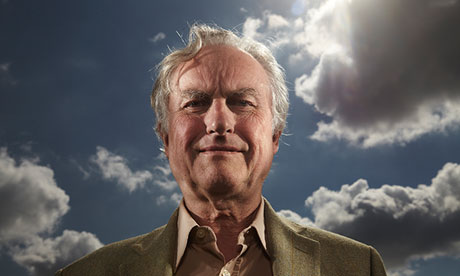
Richard Dawkins and "Secular Christianity"

It was a little odd, I'll confess, to see recent reportage of die-hard neoatheist Richard Dawkins asserting that he's Christian.

"Secular Christian," of course, but still.

If you've ever read anything by Dawkins, that statement might seem like a coding flaw in the Matrix, or perhaps a sign that the upcoming Left Behind movie is going to come out at a particularly auspicious moment.  No, actually, scratch that.  I think the last thing the studio wants is the Rapture right before it opens.  Poof, there goes your target audience.

Whichever way, here arguably the world's most famously strident atheist is saying: "I am a mumblemumble Christian."

It seems peculiar.

What Dawkins is trying to say, honestly, is something completely in line with a position he's stated and restated over the years.  He likes the ritual.  He enjoys caroling, and pageants, stockings and trees and Old Saint Nick. Even the churchy ritual itself, with vicars and funny hats and incense, there's appeal in that.  There's something comforting about it, something vewy Bwitish that puts him at ease, even if he thinks most of it is utterly absurd.

So there it is.  He's a secular Christian.

But can such a thing even exist?  Are there "secular Christians?"

On the on hand, of course there are.  There have always been.  Tradition and authority, pomp and ritual, these things have been a part of Christianity almost from the git-go.  Oh, it took them a few centuries to get rolling, but roll they have.

On the other hand, of course, I'm not sure that's what I would describe as Christian in the first place. Ritual means very little, unless it serves a deeper purpose.  The forms and structures of Christianity have often become nothing more than the ritual trappings of secular society. One has only to look at the rather awkward origin story of the Church of England for evidence of that.

Being Christian, as my teacher George MacDonald puts it over and over again, means nothing more and nothing less than doing what Jesus tells us to do. Nothing else matters. A disciple follows the teachings of their master. Period.

Ritual is only meaningful insofar as it reinforces that radical commitment.  What does that look like?

Live your life humbly and graciously.  Make decisions guided by a compassion not just for your family, friends, tribe, or nation, but for all beings.  Even enemies.  Particularly enemies.

Which means, oddly enough, that I think there can be secular Christians.  "I'm not sure about the God-thing," they say.  "But I can do those things that Jesus asks. I can live that way."  I don't know if Dawkins falls into that category.  It might be interesting to ask him.

Ultimately, I think that's what counts.  Jesus did too, of course.

Thursday, October 29, 2020

Why I voted FOR Biden.

I recognize that this election season is all about opposing your opponent.  It's about coalescing around hatred for ones enemy, about tapping into that group energy that comes from having a person you can focus your anger on.

It's classical Alinskian politics, after all.  Nothing motivates human beings more than having a villain to fight, a face to put on your hate, a heel to boo and hiss and attack.  And Lord have mercy, do we have that energy going on right now.

But though I feel that spirit out there mightily, and it rises up on the wings of my anger about clear threats to the integrity of the republic, I also don't really trust that energy.  It's evil, after all.  And my Teacher doesn't fight evil with evil, no matter what Palpatine might be hissing at me on Twitter.

I take a deep breath, center away from that form of power, and try to think positively.  Where is the good in my choosing?  How does seeking the good...not just my own, but of the republic I love...drive how I will act as a citizen?  I have already voted, going early because, well...it seems necessary this year.

So let me say this:  I voted for Joe Biden because he's a decent person who will be a decent, competent president.  When I voted, I did not do so grudgingly, or with reservations.  I am not simply voting *against* someone.  I want Joe Biden to be president.  Frankly, I wanted him to run in 2016, and was disappointed when he made the choice to step aside.  My decision to cast my vote for Biden is affirmative, not a "best of two bad choices" or a poke in the eye to those who see the world so very differently than I.  There are reasons for this.  Let me lay 'em out for ya.

1) Biden is a moderate.  I am also a moderate.  Well, moderate in some things.  I am moderate in my moderation.  But generally, I don't believe in abrupt change, or in moving suddenly unless there's a truck coming at you.  Evolution is life's path through the order of creation, and it is also the best way to accomplish necessary adaptation.  Abrupt changes to living systems are likely to fail.  Moderates consider the possible good on either side of a contentious issue, and find the path that makes the most sense given the reality we inhabit.  Not the pipe dream of a perfect future, or the lie of a perfect past, but the reality of where we are, who we are right now, and how we might take that step to become better.

I see that logic in most of what Biden does.  Take, for instance, Biden's  stance on busing, for which he was attacked during the primary season.  Busing was, quite frankly, a shortsighted solution to a real problem.  Decoupling students and parents from local schools is an ideologues idea of an answer to systemic failures in our school systems.  I would vote against any candidate who proposed it, because there's value in community, and in not having to drive halfway across the damn county to bring my kid something they forgot, or to pick 'em up when the nurse calls.  It's not racist to oppose it, because race isn't the only thing at play when it comes to busing. 

Moderates think about such things, and I am voting for Biden because he is a moderate.

2) Biden knows how to work with others.  Again, this is because Biden isn't a radical or an egotist.  He doesn't see politics as a zero sum game, but understands that you're better off at least trying to connect with those who aren't your base.  He's representative of a better time in American politics, when folks were willing to reach across party lines to get things done.  A better time, frankly, than the one we inhabit.  He's got a track record of this, a lifetime of evidence that he is willing to find common ground and treat those who disagree with him honorably.  

He is a liberal, in the classical sense of the term.  Liberality is the enemy of radicalism, and has always been.  It is neither leftist nor right-wing.  In the Soviet Union, it was the liberals who were harassed and imprisoned.  In Nazi Germany, liberality was equally attacked.  Why? Because liberals are a threat to every form of authoritarianism.  They insist on listening to and considering the potential merits of other positions.  Liberality also assumes that the person you are talking to is not a caricature, but an actual human being.  Kindness, grace, mercy, and understanding are liberal virtues.  Biden is a liberal in the most traditional sense of the word.

In part, that comes from his persona.  Let's talk about that. 

3) Biden is a centering presence.  Tone matters in leadership, as it does in all relationships.  Try saying something to your wife in a gentle tone.  Now say it in a snarky, bullying tone.  Which one is more likely to have you sleeping on the sofa?

Biden listens.  He is genuinely the kind of person who cares.  It's why he's been around as long as he has, because it's not just a facade or a schtick.  It's his identity.

If you want to unify a nation, there are different approaches to doing that.  The best approach is to appeal to the center, to reach out to the best shared spirit of a people.  That calls a nation together.  It unites from common purpose, and from a position of shared hope and determination.  It is the path of nations that are growing and moving forward.

You can also use darker energies to force unity.  Fear and hatred are excellent tools for pulling a people...or a subset of people...towards a given end.  They can be powerful.  These work well when coupled with brute force.  If a people aren't united by common purpose, you can motivate a subset of them with fear of an enemy, then use the coercive power of a police state to subdue and subjugate the rest of them.

A leader must express that, particularly if they want to lead more than a subset of partisans.  If you want a nation to cohere, and if you dislike divisiveness, you need to choose leaders who refuse to use the energy of division and disruption.  Seek the measured, the thoughtful, and the leader who will acknowledge and respect a worthy perspective, even if it is offered by a political adversary.

That said, there's always the concern that a moderate leader won't be able to push back when pressed, that they'll not have the necessary spine to resist when the integrity of the nation is attacked or pressed by a hostile aggressor.

After the first debate, we know what he looks like responding to blind aggression now, so, yeah.  That one's fine.

4) Biden is old. 

He is not young. For many folks, this is spun as a negative.  Joe Biden is 77.  He isn't hip and edgy and now.  Farthest thing from it.  But with age can come wisdom.  A lifetime of experience is not irrelevant, nor is it irrelevant that he understands the ebb and flow of political fads.  I don't buy into the idea that age is only a negative.  Jesus Mary and Joseph, it's not like we're living in the world of Logan's Run.  Well, not quite yet, anyway. 

I value the vision and depth of those who have lived more years than I, seen more things than I, and know more than I.  I understand things in middle age that I did not in my youth.  Every year, my well of experience deepens. 

There are two concerns, of course.    First, that age can come with significant diminishment of cognitive function.  Which is why I've made a point of listening to Biden speak off the cuff, and listening to him answering questions.  Not for just a soundbite, but for a whole hour of speaking, unfiltered by any spin.  He's not the best at it, not as good as Obama or even as Reagan.  But neither is he incompetent.  

Second, that age can calcify a person's perspective, and make them less likely to respond effectively to a new and unanticipated challenge.  Old dogs often go back to the same bag of tricks, over and over and over again.  It's a human tendency, and one I feel in myself as I get more curmudgeonly with age.  To counterbalance this, you need liberality, a willingness to see the good in the new, and one other thing.  You also have to have people who you respect to teach you things you don't already know.  Which gets me to the next point.

5) Biden is more than Biden.  

He isn't perfect, and he doesn't pretend to be.  But Biden is the sort of leader who knows to listen to wise counsel.  He does not assume he knows everything, or that his opinions are the only ones that matter.  A Biden presidency would engage the minds of other human beings, tapping into deeper expertise and acknowledging that one single person cannot know all things.

If your understanding of leadership is that good leaders are strong and in complete control of everything, that might not work for you.  Some folks assume that a leader who doesn't just give orders and demand loyalty is somehow "inauthentic."  As a pastor who cares for my community and from my doctoral work in leadership dynamics, I know that churches...and by extension, any human group...that are run by one person with ultimate power?  They fail. 

The strong church...or organization, or nation...is the one where the gifts and wisdom of the whole group are utilized.  Expertise is not smothered by ideology or ego.  The power of the team, and the strengths we all bring?  They all need to be brought forward.  In a time when we are tested by a hornet's nest of crises, we need that kind of leadership.

6) Biden personally manifests the Christian virtues. 

This isn't going to work for everyone, as not everyone is Christian.  But I am.  The teachings of Jesus define my path, and while I'm the farthest thing from perfect, I measure my success as a soul by how I do what Jesus asks me to do.  What that looks like as we live day to day is defined well by the classical Christian virtues.  There are many different ways to present that set of morals, but one of the clearest is found in ancient Christian teachings about vice, sin, and the virtues that counterbalance them.

The Seven Deadly sins, we know.  Lust. Gluttony. Greed. Sloth. Wrath. Envy. Pride.  Give power to a person ruled by those sins, and they will cause harm.  Against them...not in parallel but on their own terms... we find arrayed the angels of the Seven Virtues.  Chastity.  Temperance. Charity. Diligence. Patience. Kindness. Humility.  Give authority to a soul that has tapped into the power of these graces, and they will be a blessing.

Let's break those virtues down.  Chastity means containing carnal desire through fidelity in relationships.    Temperance expresses itself through moderation of impulses, by refusing to allow the momentary impulse to drive your choosing.   Charity means benevolence, a willingness to sacrifice self for the greater good, and a turning away from the hunger to maximize personal benefit at the expense of other.  Diligence means putting in the hard work necessary to do a thing.  Good things take time, dedication, and focus.  Patience means playing the long game, ignoring the provocation of the moment and keeping your heart turned towards your purpose always.  Kindness requires a concern for others and their wellbeing, and for that concern to govern your behavior towards all.  Kindness rejoices in and magnifies the successes of others.  Humility creates in us a willingness to learn, an openness to be changed when we are wrong, and a servants heart.

I see all of these spirits working in Joe Biden, and not just now, but over the many years we've been able to watch him in public service.  Is he perfect?  No.  None of us are.  But you can tell from his life where his priorities lie, and how his deeply held lifelong faith forms and shapes who he is.  You shall know them by their fruits, as my Teacher said.

7)  Joe Biden Loves to Drive.  

This isn't going to work for everyone, because not everyone loves cars the way that I have since I was a little boy.  But Joe Biden's a car guy.  I love cars.  Sweet baby Jesus, do I love cars.  Biden still owns the same Corvette he bought back when he was a young man, and clearly takes pleasure in it.  The thing he hated most about being VP was not being able to get out and drive.  He likes the feel of a fast car, the elemental pleasure of being behind the wheel.  

As it so happens, the first truly fast car I ever drove was my uncle's '65 Stingray.  Fuel injected 327, sky blue, gorgeous.  Dang, was that fun.

This is, I'll admit, a silly thing, but I know that were I to ever meet Biden, I'd have trouble ending the conversation.  Because God help me, I can blabber on about cars all day long.  Just ask my congregants.  So while I feel some lament about depriving Joe of that for the next four years, well...I can appreciate him.